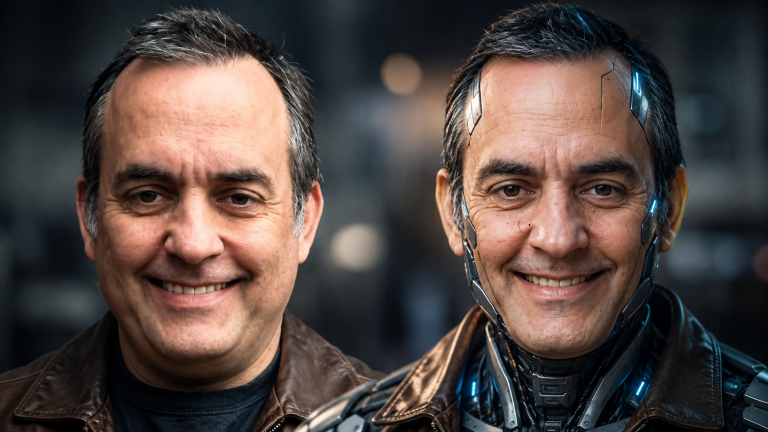
The top 50 of the 2500+ submissions to the first FutureVision XPrize were announced today, and unfortunately “The Moon We Made” was not among them. Congratulations to those who advanced in the competition. You can watch and vote on their entries at the FVXP website.
The reactions from the fellow contest submitters on the dedicated Slack channel were embarrassing. A lot of unprofessional sour grapes, complaints to the contest organizers, and vows to bomb Peter Diamandis’s X feed. I understand their feelings because a lot of work went into these submissions in a short period of time, but really, people, move on. There are so many wonderful other competitions out there you could resubmit to.
I do admire the contest’s mission statement. It’s built on the premise that science fiction has been focusing too much on negative and dystopian visions of the future. In the spirit of “Star Trek,” they argue, writers should cultivate futuristic visions we can aspire toward rather than retreat from. Diamandis is a big proponent of artificial intelligence, and filmmaker-submitters naturally gravitated toward genAI tools and AI-positive stories.
“The Moon We Made” tackles today’s AI fears head-on. Society’s legitimate concerns about the technology’s intersections with intellectual property, environmental impact, labor displacement, and the very uniqueness of human creativity are not going to go away by us putting our heads in the sand and chanting, “No AI!” or, in the words of some of my characters, “Soli Homines!” Thoughtful regulation, legislation, and maybe even international treaty is what’s called for. My optimistic version of the future is that mankind will come to peace with its creation.
The questions after that are more philosophical, and that’s what I enjoyed sinking my teeth into with this story. Are our AIs just tools to boost our thoughts, or will they become something more? What happens if/when we succeed in developing a self-aware artificial general intelligence? Does that mind qualify as a person, and if so, what is its status within our society: slave, child, or partner? All of these questions need further examination, and I believe science fiction is uniquely qualified to ask them and maybe even answer them. It’s been asking them at least as far back as Mary Shelley.
One other thought. A few days ago, I read an interesting diatribe by a fellow writer on that aforementioned Slack channel. She was upset by someone who’d trolled her concept trailer, criticizing her use of AI tools. She pointed out that back in the 90s, when she started using desktop publishing, that she was told she wasn’t a real journalist. When she presumed to teach an art class, she was told she wasn’t a real artist. When she used a word processor, she was told she wasn’t a real writer. When she used a digital camera, she was told she wasn’t a real photographer. And now, using the latest tools to cheaply make film, she’s being told she’s not a real filmmaker. “When do I get to be an artist?” she asked. “Whose permission do I need?”
The answer to that, of course, is you don’t need anyone’s permission to be an artist. If people don’t like how you lawfully make art, then that’s their problem. One might even argue that their reaction to your art, positive or negative, is an essential part of the beast. I’ve encountered some of the same criticism, and I don’t think I care anymore what people think. I’m making my own art and sending it out there. Some of it lands and wins awards, and some of it doesn’t. The point is to keep processing the world in a creative way, for yourself and for others, and that’s enough.